

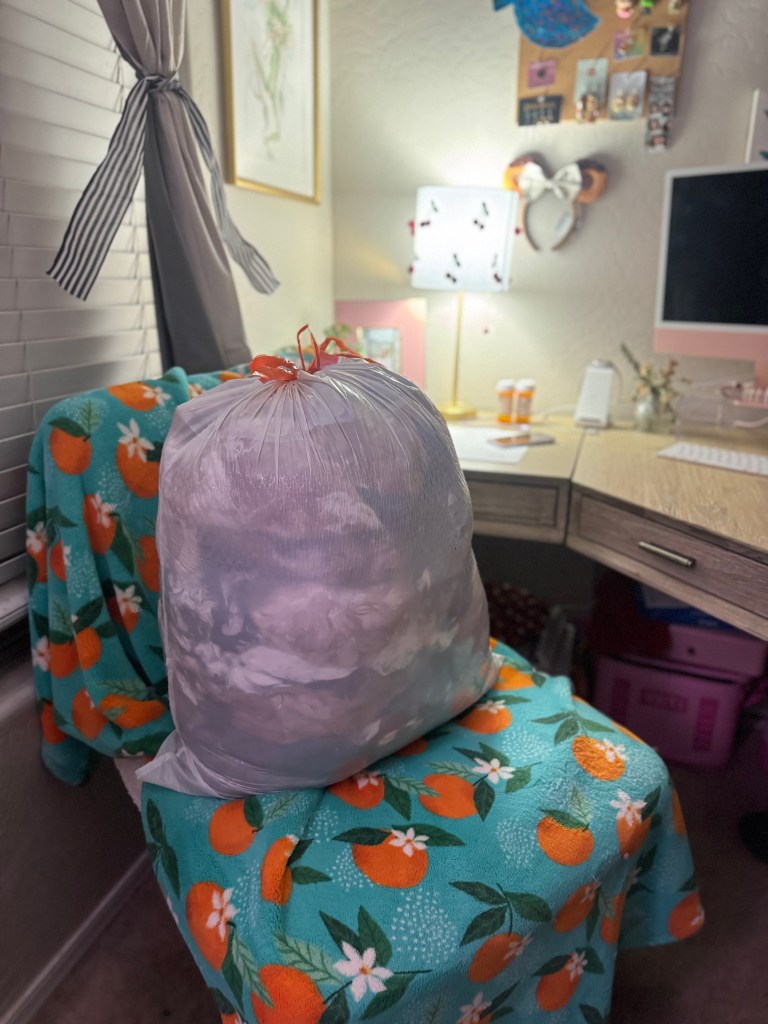
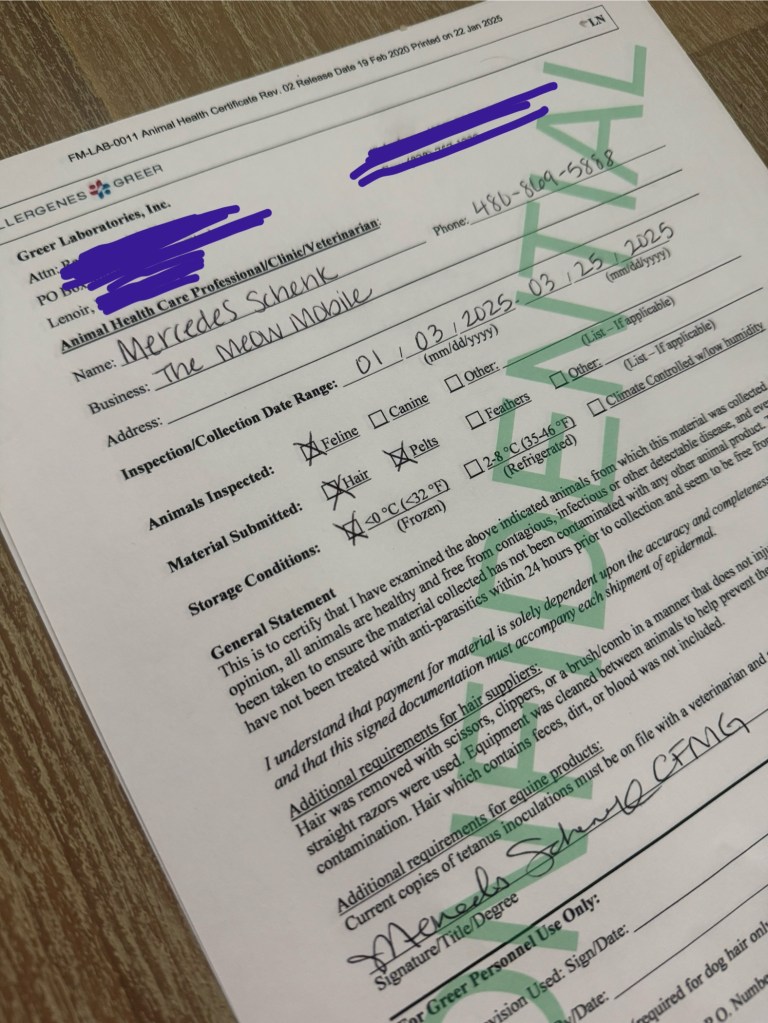
As a Certified Feline Master Groomer, I have a unique opportunity to work with a global laboratory known as Stallergenes Greer. Essentially, I send them a shipment of dirty cat hair I acquire from my cat clients and they then take it and test it in an attempt to finding a solution for individuals with cat allergies!
Clean Hair Has Less Allergens
This is such a rewarding experience to be able to participate in such a scientific feat–and it’s important to notate that they only want dirty hair. That is to say, they want the hair that has either been shaved off or brushed out prior to bathing. Once the hair has been washed, it is not allowed to be used as a sample.
You see, when people are “allergic to cats”, they’re actually allergic to certain proteins that cats secrete. Humans who experience a reaction are reacting to proteins ranging from Fel d 2-8, but a protien known as Fel d 1, (located in their saliva, urine, and sebaceous glands) is the most common. The sebaceous glands are located in the skin and they excrete something known as sebum, which we call grease. Sound familiar?
Between all of the licking and spreading saliva everywhere, and the natural excretion of grease (just like us) those proteins accumulate and increase the exposure to humans who suffer reactions. This is one of the major reasons I have clients book on a 4 week basis, and that is to keep their allergies
under control. In fact, plenty of my clients no longer need to take hefty allergy medications daily since their cats are on such a regular maintenance schedule that they can go completely unmedicated for weeks at a time. It’s important to emphasize here though, that regular grooming does need to be coupled with regular housekeeping. I can bathe the cat until sundown next week, but if their bedding, cat tree, and other textiles are not being regularly washed then they simply go back and run themselves in it all over again.
It’s easy to tell potential clients, “sure just wash your cat and you’ll both feel better” and have it seem as though it is just some sort of gimmick, but the proof is in the science. I have to sign special laboratory forms vouching that my cat hair is the dirtiest of the dirty, and has been kept in conditions that prevent mold or bacterial growth.
And yes, I do that by keeping it in a special freezer in my garage. And no, my mother in law was not expecting to come across it babysitting, trying to locate the frozen corn dogs for the kids.
So if you see me awkwardly shoving your dirty cat hair into a bag and saving it, I promise it is for science and I’m not actually that weird.
A lot of clients have asked if they can help me out by saving it throughout the month until I come again, but the short answer is no. I love the thought, but I have to collect it under very specific parameters and be able to make sure it’s not cross contaminated with a variety of things. It’s not quite as simple as any ol’ cat fur.
 Cat Groomer